
Prof. Li Xiong, Emory University, USA
Abstract. AI systems increasingly learn from traces of human behavior, including mobility trajectories, health records, online interactions, and social data. While these data enable behavioral modeling, public health insights, and urban mobility analytics, they also create risks of membership and attribute inference, as well as unintended extraction of memorized data. This talk explores how AI can learn from behavioral and social data without revealing protected information across the AI lifecycle. I will highlight our recent work on protecting web-published content before model ingestion, privacy-preserving generation and sharing of mobility and other structured human data, privacy-preserving training, extraction-risk measurement, and machine unlearning. I will conclude with open challenges for trustworthy behavioral AI in generative and agentic systems.
Bio. Li Xiong is the Samuel Candler Dobbs Professor of Computer Science and Biomedical Informatics at Emory University, where she directs the Assured Information Management and Sharing (AIMS) Lab. Her research focuses on trustworthy and privacy-enhancing AI for healthcare, public health, and spatial intelligence. She is an ACM, IEEE, and AAAS Fellow, recognized for her contributions to privacy-preserving and secure data analytics. Her research has been supported by major U.S. government agencies and global industry partners, including Google, IBM, Cisco, AT&T, and Mitsubishi. More details are available at http://www.cs.emory.edu/~lxiong.
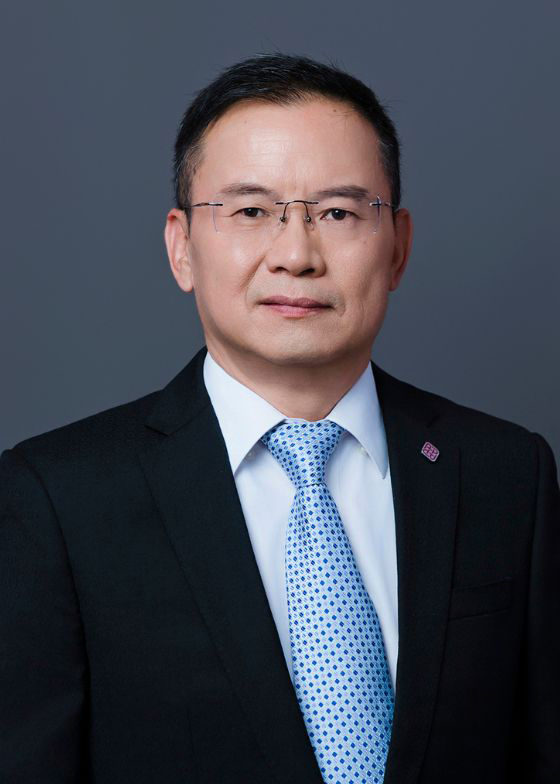
Prof. Qing Li, The Hong Kong Polytechnic University, Hong Kong SAR, China
Abstract. Smart Space denotes dynamic, adaptive environments enhanced with robotics and AI technologies. Examples include smart homes/offices/cafes. By leveraging and integrating Computer Vision, Natural Language Processing, AIoT, Data Mining, Recommender Systems, and Sympathetic Computing, Smart Space can help improve efficiency, personalization, and user satisfactions with seamless interactions. In this talk, we introduce PolyRAG, a multi-level knowledge QA framework supporting multi-level querying for an indoor robot application system. Building on top of a naive RAG layer, we construct a knowledge pyramid by adding a knowledge graph layer and an ontology schema, so as to obtain a good balance of recall and precision when applied to a specific domain such as coffee robot interactions. We employ cross-layer augmentation techniques for comprehensive knowledge coverage and dynamic updates of the Ontology scheme and instances. To ensure compactness, we utilize cross-layer filtering methods for knowledge condensation in KGs. An experimental coffee robot prototype is constructed, and preliminary empirical studies are conducted to show the effectiveness of our PolyRAG supporting a waterfall model for querying from ontology to KG to chunk-based raw text.
Bio. Qing Li is a Chair Professor and Head of the Department of Computing, the Hong Kong Polytechnic University. He received his B.Eng. from Hunan University (Changsha), and M.Sc. and Ph.D. degrees from the University of Southern California (Los Angeles), all in computer science. His research interests include multi-modal data management, conceptual data modeling, social media, Web services, and e-learning systems. He has authored/co-authored over 500 publications in these areas, with over 74,000 citations and H-index of 111 (source: Google Scholars). He is actively involved in the research community, serving as an Editor-in-Chief of Computer & Education: X Reality (CEXR) by Elsevier; he has also served as an associate editor of IEEE Transactions on Artificial Intelligence (TAI), IEEE Transactions on Cognitive and Developmental Systems (TCDS), IEEE Transactions on Knowledge and Data Engineering (TKDE), ACM Transactions on Internet Technology (TOIT), Data Science and Engineering (DSE), and World Wide Web (WWW) Journal, in addition to being a Conference and Program Chair/Co-Chair of numerous major international conferences. He also sits/sat in the Steering Committees of DASFAA, ACM RecSys, IEEE U-MEDIA, WISE and ICWL. Prof. Li is a Fellow of IEEE, and of International Academy of Artificial Intelligence Sciences (AAIS).
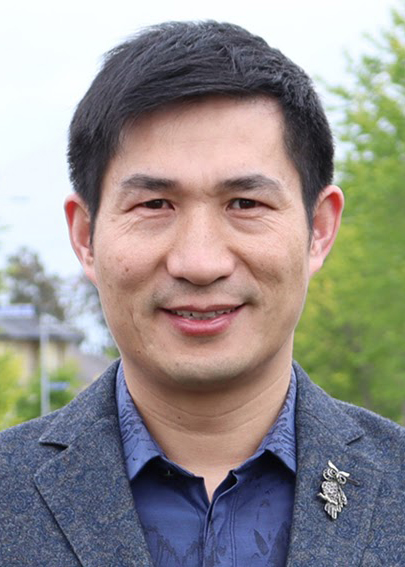
Prof. Feng Xia, RMIT University, Australia
Abstract. Graph learning has transformed our ability to model complex behavioural and social systems by capturing the relationships, interactions, and dynamics through which individual and collective behaviours emerge. Yet prediction is no longer the final frontier. The rise of large language models (LLMs) and agentic AI raises a more ambitious question: can AI move beyond learning from graphs to understanding social contexts, reasoning about consequences, and acting responsibly? This talk will trace a journey from graph learning to a broader vision of agentic social intelligence. I will discuss how graph representation learning can uncover hidden structures, recurring patterns, and evolving collective dynamics in complex social systems, and also examine critical challenges such as fairness and explainability. I will explore the emerging convergence of graphs, LLMs, and AI agents and conclude by outlining a research agenda for the new frontier of agentic social intelligence.
Bio. Dr. Feng Xia is a Professor of AI at RMIT University, Melbourne, Australia. His research interests include artificial intelligence, graph learning, brain, robotics, and digital health. He is a Fellow of the IEEE. His contributions and leadership have been recognized by prestigious awards. His work is featured in top-tier journals and conferences. Dr. Xia has extensive editorial and organizational experience, having served as an Associate or Guest Editor for over 20 journals and in various Chair roles for more than 30 conferences. He is the Chair of IEEE Task Force on Learning for Graphs. More details are available at http://xia.ai.
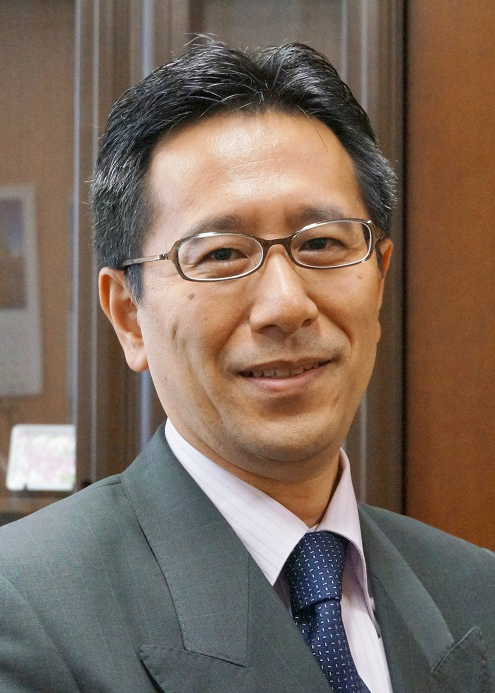
Prof. Jun Miyazaki, Institute of Science Tokyo, Japan
Abstract. The practical deployment of Large Language Models (LLMs) utilizing massive datasets marks a significant milestone in computer science. While this major paradigm shift is characterized by the efficient storage of vast training data and high-performance computing over large-scale computer clusters, it owes much to the achievements deeply rooted in decades of database technology research. Indeed, without the continuous feedback from database research, the progress of AI technology would have been significantly delayed. Conversely, within the database field, the integration of AI into various applications is expanding rapidly. Nevertheless, since database systems inherently require absolute correctness and determinism, applying AI into the core of the database system remains challenging. This talk explores the inherent affinity between AI and database technologies and outlines future perspectives for establishing a mutually beneficial, win-win relationship between both domains.
Bio. Jun Miyazaki received the B.E. degree from the Tokyo Institute of Technology, Tokyo, Japan, in 1992, and the M.S. and Ph.D. degrees from the Japan Advanced Institute of Science and Technology (JAIST), Ishikawa, Japan, in 1994 and 1997, respectively. From 2000 to 2001, he was a visiting scholar in the Department of Computer Science and Engineering at the University of Texas at Arlington. In 2013, he joined the Institute of Science Tokyo (formerly the Tokyo Institute of Technology), Tokyo, Japan, where he is currently a Professor and the Dean of the School of Computing. His research interests include database systems, information retrieval, information recommendation, and high-performance computing. He has been actively involved in numerous international conferences and workshops, serving as a chair or program committee member for events such as IEEE ICDE (2005), VLDB (2020), MDM (2006), SRDS (2014), and DASFAA (2003, 2010, 2024). He also served as Vice President of the Database Society of Japan (DBSJ) from 2018 to 2024. He is a member of ACM, a senior member of IEEE, and a fellow of IEICE and IPSJ.