
Han Wu Shuang Bao, East China Normal University, China
Abstract. AI has shifted social science paradigms. Large language models are replacing individual human participants. Collective representations of attitudes, biases, stereotypes, and other important psychological constructs can be discerned more directly at the societal level. In this presentation, I will introduce the Fill-Mask Association Test (FMAT), a new computational linguistic paradigm I developed that can quantify such collective representations. The FMAT follows a simple logic of “cloze task” and can be better understood from a Bayesian perspective, measuring biases and stereotypes as conditional probabilities. As an advantage, the FMAT allows us to specify how targets are associated with attributes in contextualized sentences (i.e., propositions), thereby suitable for studying complex constructs and testing relevant theories. I will briefly review our work with the FMAT (Bao, 2024) in testing new forms of stereotypes (Bao & Gries, 2024; Wang et al., 2025), intergroup biases (Bao & Gries, 2025), and collective memory of social changes (Bao et al., 2026), with a highlight on our latest project about bias representations toward 264 global cultural groups across English and Chinese discourse (Bao et al., revise & resubmit). Future directions of this line of research will be discussed.
Bio. Dr. Bao, Han Wu Shuang 包寒吴霜 (Bruce) is an Assistant Professor of Psychology at East China Normal University. After receiving his PhD from the Chinese Academy of Sciences in 2022, he worked as a Postdoctoral Research Associate (2022~2024) at the University of Manchester, where he started an interdisciplinary journey. His research now focuses on using natural language processing (NLP) and computational linguistic methods to understand human psychology, society, and culture. He proposed a new computational linguistic paradigm for social sciences—the Fill-Mask Association Test (FMAT), which can measure collective representations of attitudes, biases, stereotypes, and other important psychological constructs at the societal level. He has published a series of research articles on social computing in leading journals, such as Journal of Personality and Social Psychology, American Psychologist, British Journal of Social Psychology, Advanced Science, and China Quarterly. He has also developed five R packages (published on CRAN) for social computing and general data analysis: bruceR, ChineseNames, PsychWordVec, FMAT, and DPI, together having achieved over 210k downloads and uses worldwide. Dr. Bao now serves as a Youth Editorial Board Member of PsyCh Journal (2026~2028) and has served as a reviewer for Nature, Nature Human Behaviour, Nature Communications, and 30 other journals.
Haoyang Li, The Hong Kong Polytechnic University, Hong Kong SAR
Abstract. This talk presents my research at the intersection of graph intelligence, trustworthy AI, and human wellbeing. I will first discuss knowledge graph construction and graph-enhanced retrieval, where graphs capture complex and evolving relationships to support service search and enterprise knowledge question answering. I will then introduce research on reliable retrieval-augmented generation and large language model reasoning, with a focus on structure-aware retrieval, verifiable evidence, and systematic reliability evaluation. Finally, I will present human-centered AI research for wellbeing, including suicide-risk modeling from longitudinal social-media data and AI-assisted support for student wellbeing and early intervention. Across these directions, my research explores how advances in data management and artificial intelligence can better account for human behavior, improve the reliability of intelligent systems, and address practical societal needs.
Bio. Haoyang Li is a Research Assistant Professor in the Department of Computing at The Hong Kong Polytechnic University. He received his Ph.D. from The Hong Kong University of Science and Technology and his B.Eng. from Huazhong University of Science and Technology. His research lies at the intersection of graph data management, trustworthy AI, and behavioral and social computing, with interests in social graph mining, retrieval-augmented generation, reliable large language model reasoning, and AI for wellbeing. He has published over 50 papers in leading conferences and journals, including SIGMOD, VLDB, and ICDE. His work aims to connect scalable AI technologies with human behavior and societal needs.
Hongzhan Lin, National University of Singapore, Singapore
Abstract. AI agents increasingly act through tools: they issue refunds, send documents, update records, and trigger downstream operations. When an action changes external state, a correct final outcome does not guarantee that the action was supported by evidence the agent had established beforehand. In this talk, I will examine where the path from evidence to action breaks, and how these failures change as the required actions become more demanding. I will first describe how we trace agent behavior: for each consequential action, what information had been established, when the action occurred, and whether downstream dependencies were satisfied. I will then present our analysis of agent trajectories across several operational domains, models, and agent harnesses, moving from static action judgment and investigated non-action to single- and multi-action workflows. Several findings stand out. Strong static judgments can coexist with much weaker interactive execution. Failures often begin before execution: agents stop with incomplete investigation, or act before the required evidence is established. Once the evidence is in place, single-action execution is usually reliable, while multi-action workflows expose further failures. Agents may also keep acting when decisive evidence is withheld. I will close by discussing what these findings imply for evaluating and building more reliable AI agents.
Bio. Hongzhan Lin is a Research Fellow at the Centre for Trusted Internet and Community (CTIC), National University of Singapore, working closely with Prof. Mong-Li Lee, Prof. Wynne Hsu, and Prof. Tat-Seng Chua. He received his PhD in Computer Science from Hong Kong Baptist University in 2026, and was a visiting PhD student at the NExT++ Research Centre, NUS, from 2024 to 2025. His research lies at the intersection of natural language processing, multimodal reasoning, and social computing. His first-author work has appeared at venues including ACL, EMNLP, NAACL, AAAI, WWW, and IEEE TKDE. He serves as an Area Chair for ACL, EMNLP, NeurIPS, EACL, and AACL, and as Web & Registration Chair of ACM WebSci 2027.

Lin Tian, University of Technology Sydney, Australia
Abstract. For most of the past decade, the fight against online misinformation has been framed as a classification problem: is this post false, is this account fake? Working with real platform data has convinced me that the harder, and more useful, questions are behavioural. Who is behind a coordinated campaign? How quickly will a piece of misinformation take off? What makes people engage with it, and why does the same content work differently on different platforms? This talk follows one line of work through those four questions. The detection part is MetaTroll and X-Troll, which find state-sponsored information-operation accounts from a handful of examples and explain why an account was flagged. Prediction is IC-Mamba, a state space model built for the interval-censored engagement data platforms release; within the first half hour it can tell which misinformation will go viral and whether the amplification is organic or coordinated. CITRUS brings in causation, estimating what engagement would have been without news coverage or search interest, and turns up hidden amplifiers with modest followings and narratives that grow six-fold when promoted. DREAMS is the explanation step: social exchange theory built into the model, so it can separate universal drivers of engagement from platform-specific habits. I will close with where this is heading, which is game theory and reinforcement learning models of how influence operations adapt under detection pressure, so defences can be hardened before a new evasion strategy shows up, and with what a behavioural and social computing community can bring to that problem.
Bio. Lin Tian is a Research Fellow in the Behavioural Data Science Lab at the University of Technology Sydney and works on machine learning for online misinformation. Most of the field asks whether a post is false. Lin is more interested in the questions around it, the ones that sit between computer science and behavioural science: who is behind a campaign, how fast it will move, what makes people engage with it, and why the same content lands differently on different platforms. Each of those has a system behind it. MetaTroll and X-Troll pick out state-sponsored accounts from a handful of labelled examples, and X-Troll explains each flag in the language of propaganda theory so an analyst can check it. IC-Mamba is a state space model for the patchy, interval-censored counts that platforms release; half an hour after a post goes up it can say whether the post will go viral and whether the push behind it is coordinated. CITRUS asks what engagement would have looked like without a news story, a search spike or an influencer, which is how it finds amplifiers with small followings. DREAMS puts social exchange theory inside the model rather than beside it, so one model carries across platforms. The current work is about getting ahead of the adversary rather than chasing it: game theory and reinforcement learning models of how an operation adapts once it is being detected, and red-teaming studies of how little it takes to get agent guardrails to produce coordinated disinformation. Lin finished a PhD at RMIT University in 2024 on transfer learning for misinformation detection. The work has been published at WWW, AAAI, CIKM, NAACL, EACL and ECML-PKDD and has won shared tasks at CLEF, IberLEF and ALTA. Lin is a 2025 DAAD AInet Fellow, and outside work a marathon runner and skier.
Oscar Karnalim, Maranatha Christian University, Indonesia
Abstract. Artificial Intelligence (AI) significantly disrupts education. It acts as a double-edged sword that boosts learning productivity while also introducing risks of false competence and complex ethical dilemmas. To address these challenges, my research focuses on promoting responsible and ethical AI adoption through multifaceted pedagogical and technical interventions. On the pedagogical side, this involves integrating tailored mechanisms within Learning Management Systems, developing dedicated prompt builders, introducing structured learning modules, and designing AI-resistant assessment strategies. Complementing these proactive interventions, my work advances technical detection mechanisms by developing specialised AI detectors. These detectors draw on machine learning algorithms, anomaly analysis, uniqueness metrics, and similarities to AI-generated content. Furthermore, the research explores public perspectives on AI characteristics to explain how these technological traits influence learning behaviours and shape AI's broader impact on higher education.
Bio. Oscar Karnalim is an Associate Professor in Informatics Engineering and the Vice Rector I at Maranatha Christian University, Indonesia. His work focuses on human factors in computing, AI, educational technology, and academic integrity. He emphasises educational and behavioural interventions, developing automated feedback tools and gamified platforms to proactively teach students intended behaviours. He has published more than 130 papers, garnering at least 1800 citations. His research collaborations span more than 25 countries, including Canada, the Netherlands, and the USA. He is Computing's Top 30 Early Career Professionals for 2025 (IEEE Computer Society), 2026-2027 Distinguished Lecturer (IEEE Education Society) and Michael Auer Young Scientist Awardee in 2025 (IETI). Oscar has been invited to deliver talks at many international forums across Romania, Tunisia, Japan, China, Thailand, India, and the Philippines.
Usman Naseem, Macquarie University, Australia
Abstract. Large language models are becoming increasingly capable and widely used, yet their behaviour can still diverge from human preferences, values, and expectations, producing responses that are unsafe, biased, culturally misaligned, or needlessly restrictive. In this talk, I will first discuss our work on measuring and characterising misalignment in current models across different tasks, settings, and forms of interaction, including the social contexts where the right answer depends on whose values are being applied. I will then describe our efforts to improve alignment through intervention and steering approaches. This leads to a deeper question: if we can observe that a model is misaligned, can we understand why it behaves that way and reliably control its behaviour? I will introduce our work on mechanistic-driven alignment, which looks inside models to understand how alignment-related behaviours emerge, how they can be more precisely controlled, and how those interventions can be validated for safety, fairness, and reasoning quality. I will conclude with our vision for AI systems that are not only safer, but also interpretable, controllable, trustworthy, and responsive to diverse human values and contexts.
Bio. Usman Naseem is a Lecturer (Assistant Professor) in the School of Computing at Macquarie University, Australia, where he leads the SocialNLP Lab. His research focuses on LLM alignment, AI safety and trust, mechanistic interpretability, and NLP for social good. He has published over 100 peer-reviewed papers with over 6,600 citations, and has received nine Best Paper Awards, including at AAAI 2026, as well as the DAAD AINet Fellowship. He was ranked first in Australia among early-career researchers in AI, NLP and Web/IR (CSRankings 2025) and listed among Stanford and Elsevier's Top 2% Scientists worldwide. He served as Program Co-Chair for the Web4Good track at The Web Conference 2026 and as Senior Area Chair for EMNLP 2025, EACL 2026 and ACL 2026, and has organised shared tasks including SemEval-2026 Task 9 and workshops including MM4SG and VLM4Bio. One of his PhD students received a 2026 Google PhD Fellowship in NLP. More at https://usmaann.github.io/
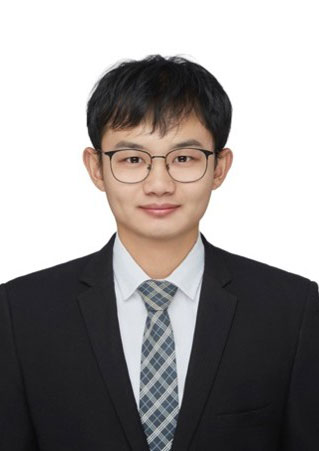
Wenjie Wang, University of Science and Technology of China, China
Abstract. Recent breakthroughs in general intelligence have highlighted the powerful cognitive capabilities of large language models (LLMs) in understanding, generation, and decision-making. However, general LLMs still face substantial challenges in meeting individual needs and addressing tasks in specific contexts. Enabling these models to “understand individuals” and adapt to the specific needs of users, organizations, and vertical domains has become central to practical AI deployment. This talk will systematically review key advances and emerging challenges in the personalization of LLMs. It will focus on efficient fine-tuning for adaptation to personalized data, dynamic memory mechanisms for long-horizon tasks, and personalized agentic frameworks for complex tasks. The talk will conclude with an outlook on the broad applications and future directions of LLM personalization.
Bio. Wenjie Wang is a professor in the School of Information Science and Technology at the University of Science and Technology of China (USTC). His research focuses on the LLM personalization, agents, and AI for Science. He has published more than 80 papers in leading conferences and journals, including ICLR, NeurIPS, SIGIR, KDD, WWW, and TOIS. He has received the Best Paper Mention Awards at SIGIR 2024 and ACM Multimedia 2019, as well as the Google PhD Fellowship. Over ten papers at SIGIR, KDD, and WWW have been selected into the most influential paper lists. His work on multi-agent collaboration was featured as a cover article in Communications of the ACM. His research has also been translated into practical applications at Tencent, Meituan, Kuaishou, and other organizations. He serves as a guest editor for ACM TOIS and as an editorial board member of Electronics. He also serves as an area chair or reviewer for venues including TPAMI, TOIS, TKDE, SIGIR, KDD, WWW, ICLR, NeurIPS, and ACL.

Yasumasa Yamaguchi, Sendai University, Japan
Abstract. The rapid spread of generative AI is beginning to reshape learning, assessment, knowledge production, and the role of teachers in education. This presentation focuses on “Zillennials,” the generation positioned between Millennials and Generation Z, and considers the role they may play in education in the age of generative AI.
Zillennials have experienced both a time when digital technologies were not yet deeply embedded in everyday life and a period in which the internet, smartphones, and social media became increasingly ubiquitous. This places them in a distinctive position between those who had to adapt to digital technologies later in life and those who grew up with them from an early age. Generative AI now represents another major technological transition. In the coming years, a new gap may emerge between “AI non-natives,” who were educated before generative AI became commonplace, and “AI natives,” who grow up with AI as a routine part of learning. Zillennials may be well positioned to serve as a bridge between these groups.
Discussions of generative AI in education are also strongly influenced by developments in English-speaking countries, particularly in North America and Europe. At the same time, countries outside the English-speaking world have an opportunity to learn from both the successes and the failures of early adopters and to reconsider generative AI in ways that better reflect their own languages, cultures, and educational systems.
This presentation therefore explores Zillennials as a potential bridge between digital natives and non-natives, and between AI natives and non-natives, while considering the possibilities for intergenerational collaboration in the future of education.
Bio. Yasumasa Yamaguchi holds a Ph.D. in Information Sciences from the Graduate School of Information Sciences, Tohoku University, and a Master of Education in Advanced Teaching (M.Ed.) from the University of the People. His research lies at the intersection of performance science, music education, and technology, with a particular interest in how emerging technologies can shape learning and musical practice. More recently, his work has expanded to explore generative AI in education, including its adoption, perception, and implications for teaching and learning.
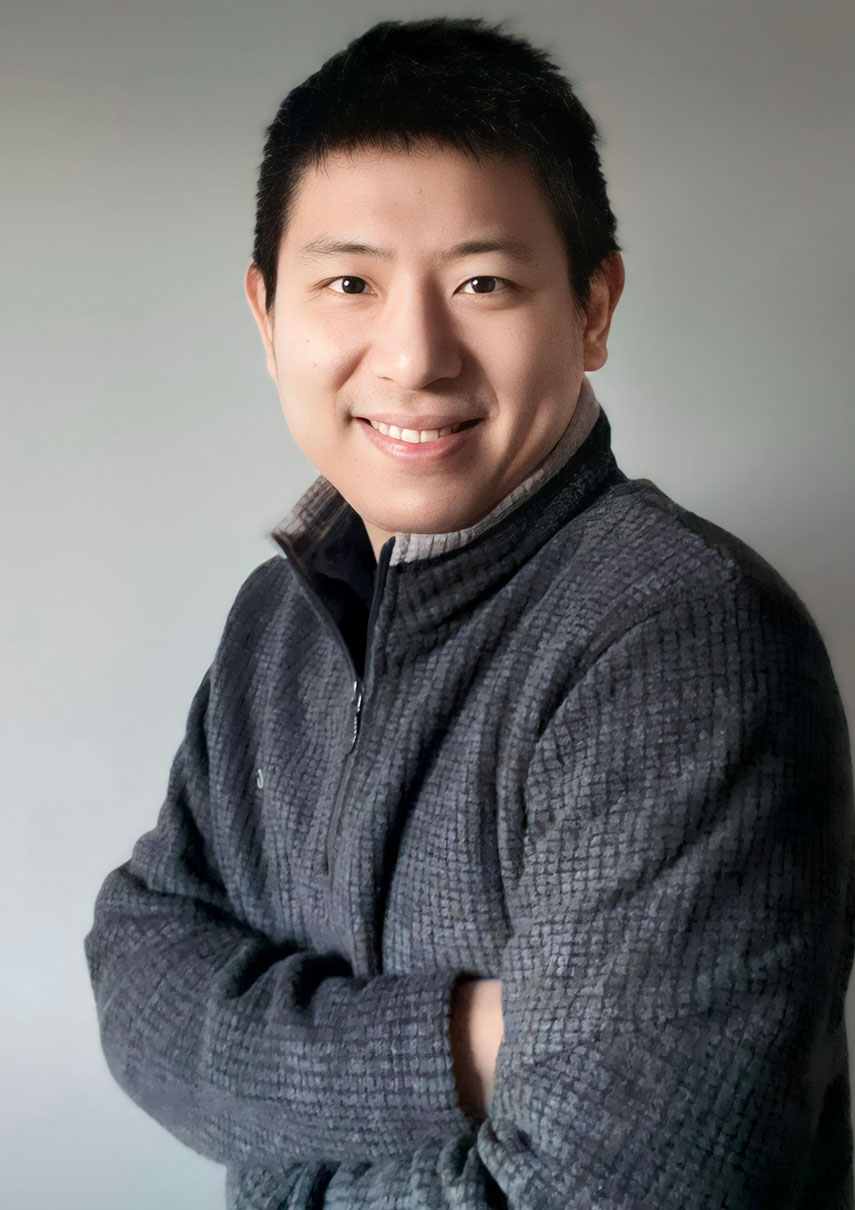
Wei Zhao, University of Aberdeen, Scotland
Abstract. AI researchers often evaluate machine translation for accuracy, but accuracy alone cannot tell us whether a translation meets the needs of the people who use it. In this talk, I will use AI-assisted literary translation as a case study to show how technical evaluation can overlook the creativity and cultural nuance that professional translators are looking for. I will illustrate this by showing how AI models handle metaphors and wordplay, and how well they comprehend source texts. I will then show how translators' input can improve evaluation methods. Finally, I will broadly talk about the concerns that translators, language learners, and language service providers raise about trust, translation quality, and societal impacts of machine translation, and show how their perspectives differ from AI researchers.
Bio. Wei Zhao is a Lecturer (Assistant Professor) at the University of Aberdeen in Scotland and the new Head of the NLP Group, which was established in 1995. His research interests include the sociotechnical evaluation of AI systems, machine translation, and AI for science, among others. He has contributed to more than 50 publications. His work has been honoured with an Outstanding Paper Award at NAACL 2025 and featured in language technology media such as Slator. He was invited to speak about public perceptions of machine translation for the Institute of Translation and Interpreting (ITI), a professional association for translators in the UK. He has also held a Heidelberg Marsilius Fellowship and received an Aberdeen Research Catalyst Award and a Royal Society of Edinburgh Research Collaboration Award. Before joining Aberdeen, he was a postdoctoral researcher at the Heidelberg Institute for Theoretical Studies and Heidelberg University. He earned his PhD from TU Darmstadt in Germany.
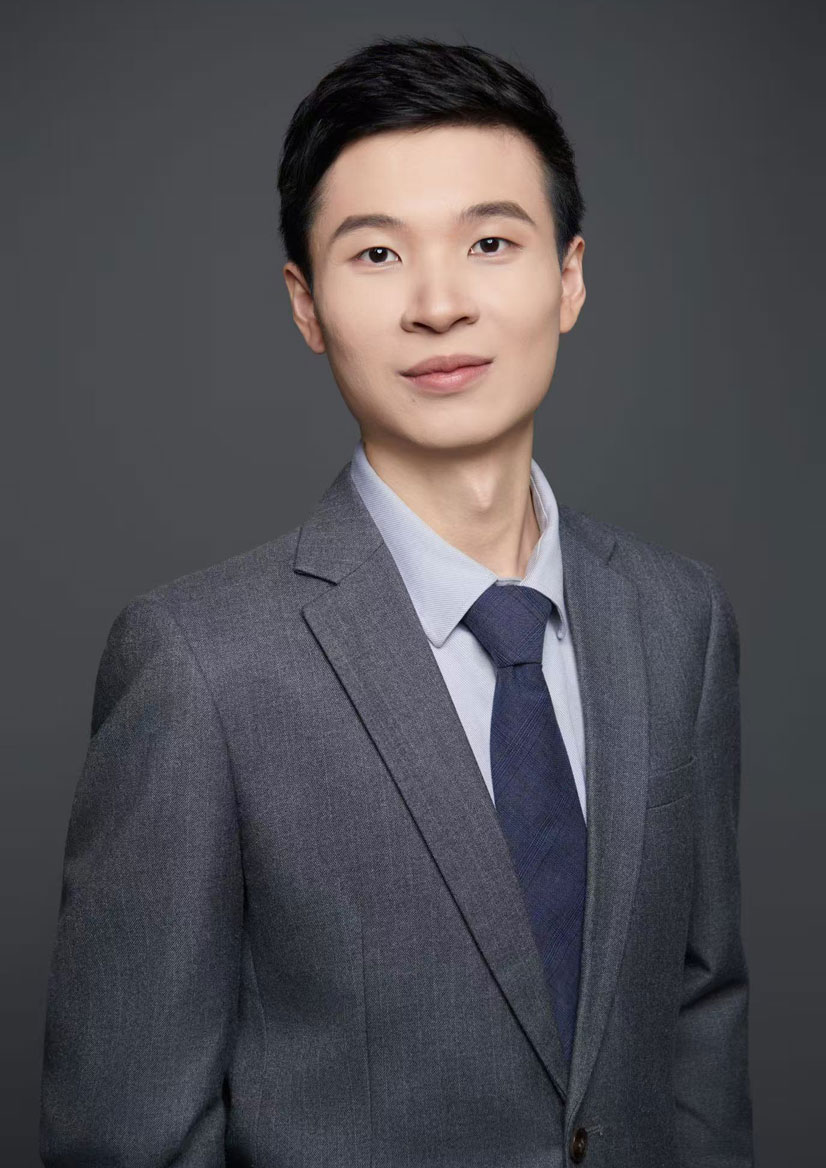
Haocong Rao, Nanyang Technological University, Singapore
Abstract. Human skeleton data provide a privacy-preserving and resource-efficient representation for understanding human identity, behaviour, and health. This talk presents our research on Human Skeleton Empowered Behaviour Intelligence, progressing from fundamental behaviour recognition to health assessment and real-world applications. We first introduce skeleton-based identity and action recognition, including self-supervised and unsupervised learning paradigms for robust gait and action representation. We then extend skeleton intelligence toward digital phenotyping and health assessment, covering gait-based disease assessment and LLM-empowered 3D gait and psychology copilots. Finally, we present translational skeleton applications such as non-invasive gait-based depression detection. We envision an agentic skeleton behavioural wellness ecosystem that integrates low-cost continuous monitoring, behaviour-health reasoning, and interpretable risk assessment to support proactive and responsible human wellbeing.
Bio. Dr. Haocong Rao received the PhD degree from College of Computing and Data Science from Nanyang Technological University, Singapore, in 2025. He is AI Singapore PhD Fellow (13 Awardees Worldwide in 2022) and Research Scientist with Nanyang Technological University, and has received several faculty offers from top Chinese universities, including a tenure-track full professor position at a top-6 CS school. He obtained his B.E. degree from South China University of Technology, China. Dr. Rao's research interests include Human Skeleton Empowered Behaviour Intelligence, Resource-Efficient Agentic AI for Healthcare, and Computational Social Science. He has published over 20 first-authored papers in top journals and conferences such as TPAMI, IJCV, CVPR, AAAI, IJCAI, ACM MM, and EMNLP. His works has been selected as IEEE TPAMI Featured Article (Top 0.2% Worldwide) and ESI Highly Cited Paper. He is a core organizer of several international workshops such as AAAI AIAA, IJCAI AIAA, IJCAI AIF, etc. He is the recipient the Distinguished PC Member of IJCAI (Top 3% Worldwide), Best Paper Award of IEEE HealthCom Conference, Best Paper Runner-Up Award of IEEE CloudCom Conference.