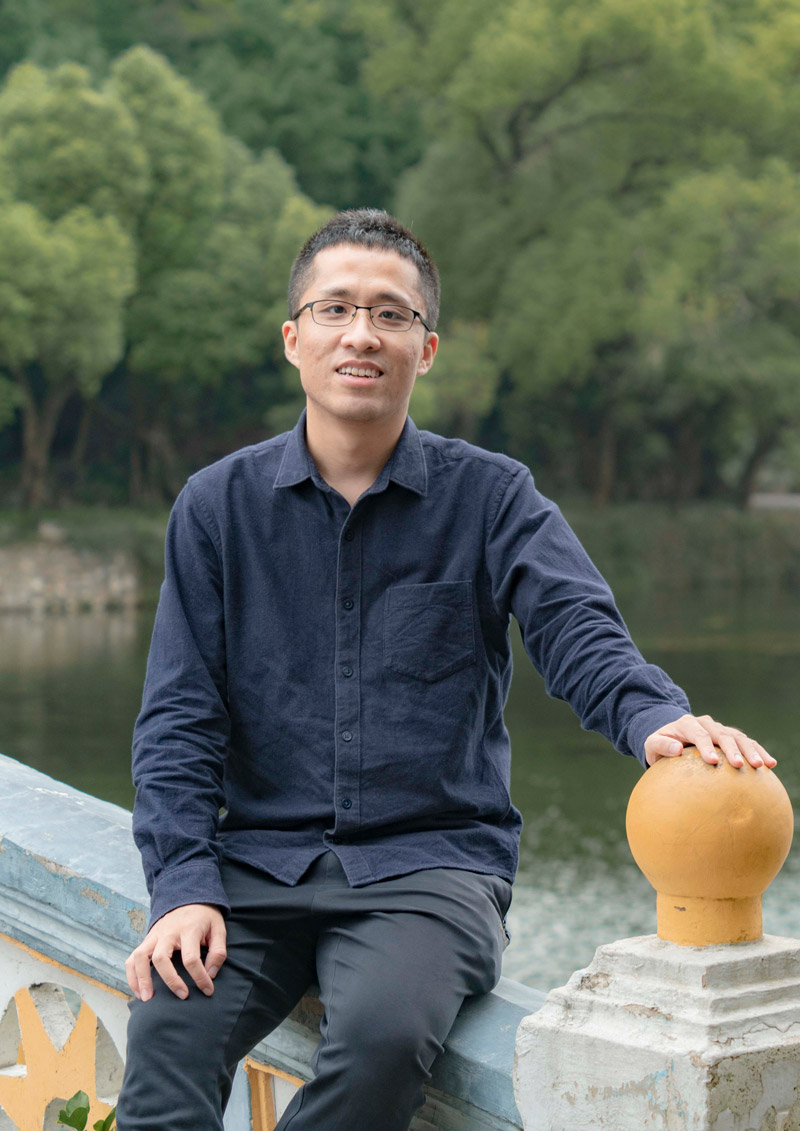
Prof. Chenhao Ma, Chinese University of Hong Kong, Shenzhen, China
Abstract. LLM agents are increasingly used to study opinion formation, information diffusion, and collective behavior. Yet a consequential layer of these simulations often remains implicit: agents do not respond to an interaction network itself, but to the information made visible in their contexts. The same agents and network may therefore produce different outcomes under different exposure mechanisms.
This tutorial presents an exposure-centred view of LLM social simulation, tracing the path from potential interactions to visible evidence, agent updates, and collective outcomes. Communication networks and memory determine what information reaches each agent, while roles, influence, and other structural cues shape how that information is interpreted. Interaction traces and emergent network structures, in turn, reveal how local updates accumulate into collective dynamics.
By treating these components as a continuous process rather than isolated design choices, the tutorial highlights structure as part of the mechanism that produces social behavior. This perspective supports more deliberate simulator design, clearer comparisons across systems, and more reliable conclusions about LLM-based social dynamics.
Bio. Dr. Chenhao Ma is an Assistant Professor at the Chinese University of Hong Kong, Shenzhen. Prior to that, he was a Postdoctoral Fellow at the University of Hong Kong. He received his PhD degree from Department of Computer Science in the University of Hong Kong (HKU) in 2021, advised by Prof. Reynold Cheng. He once was a visiting student in the University of New South Wales (UNSW) in 2019, working with Prof. Xuemin Lin. Till now, he has published more than 40 papers in the areas of database and data mining, including one of four Best of SIGMOD2020 (a world flagship conference in database areas, 4/458), and most of them were published in top-tier conferences and journals (e.g., SIGMOD, PVLDB, KDD, NeurIPS, ICML, ICLR, VLDBJ, TKDE, and TODS). He was awarded the ACM SIGMOD Research Highlight Award 2021. He has served as area chairs / PC members and reviewers for several top conferences and journals (e.g., VLDB, ICDE, KDD, WWW, CIKM, TKDE, and VLDBJ).

Dr. Blaise Delattre, Institute of Science Tokyo, Japan
Abstract. AI systems used in behavioural and social computing expose attack surfaces that go far beyond small pixel perturbations. Adversaries may jointly manipulate social-graph links and user features, rewrite prompts, coordinate text-image attacks, poison retrieved documents, or influence the tool returns consumed by an AI agent. This tutorial develops a unified view of adversarial and certified robustness for these settings. Starting from classical adversarial examples, Lipschitz methods, and randomized smoothing, it moves to social graphs, language and multimodal models, and tool-using agents. A central theme is the separability barrier: guarantees for individual channels do not necessarily compose when those channels interact. The tutorial closes with practical limitations and open research problems for trustworthy behavioural and social AI.
Bio. Blaise Delattre is a JSPS Postdoctoral Fellow at the Institute of Science Tokyo, where he works with Prof. Yang Cao. His research focuses on certified robustness, with contributions to Lipschitz-constrained neural networks, randomized smoothing, and robustness guarantees for multimodal and foundation models. He received his PhD in Computer Science from Université Paris-Dauphine PSL in 2025. His work has appeared at ICML, ICLR, AISTATS, ACL, and ECAI, including oral and spotlight papers.
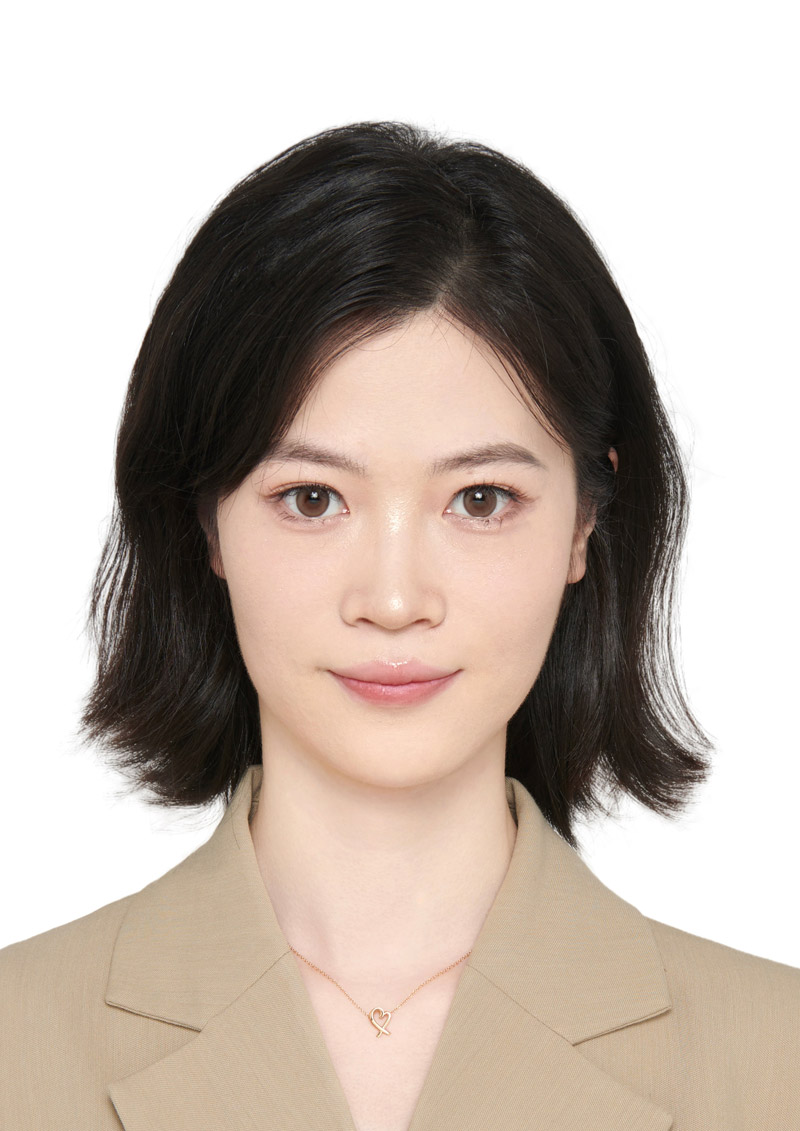
Dr. Longxu Sun, Hong Kong Baptist University, Hong Kong SAR, China
Abstract. Community search is a key graph query task that finds cohesive communities based on queries, with uses in social network analysis, team building, recommendations, bioinformatics, and fraud detection. Early work centered on dense subgraph models, efficient algorithms, and offline indexing. Recently, research has expanded to include learning-based methods, complex networks, and interactive querying. This tutorial offers a systematic overview of community search in graphs, summarizing foundations, current advances, and future directions. We first present common community models and main algorithms, such as exact and heuristic solutions, pruning, and indexing. Next, we discuss learning-based approaches, including graph neural networks and transformers, and compare them to traditional methods. We then introduce community search in complex graphs, focusing on heterogeneous and multilayer networks. Interactive community search is also covered, enabling user feedback and iterative refinement. Finally, we link these techniques to real-world applications and highlight new opportunities from large language models and graph-based retrieval. This tutorial serves as a guide for researchers and practitioners to understand and develop modern community search methods.
Bio. Dr. Longxu Sun is currently a Postdoctoral Research Fellow in the Department of Computer Science at Hong Kong Baptist University. Her primary research interests lie in community search over complex graphs, interactive graph data mining, and AI-augmented graph data management. Her recent work focuses on interactive graph querying algorithms, agentic community mining, and explainable and verifiable community search. Her research has appeared in venues including VLDB, ICDE, TKDE, the SIGMOD Companion, and so on. She has presented a tutorial at PAKDD 2026 and has served as a program committee member for AAAI, WSDM, PAKDD, and IEEE BigData.